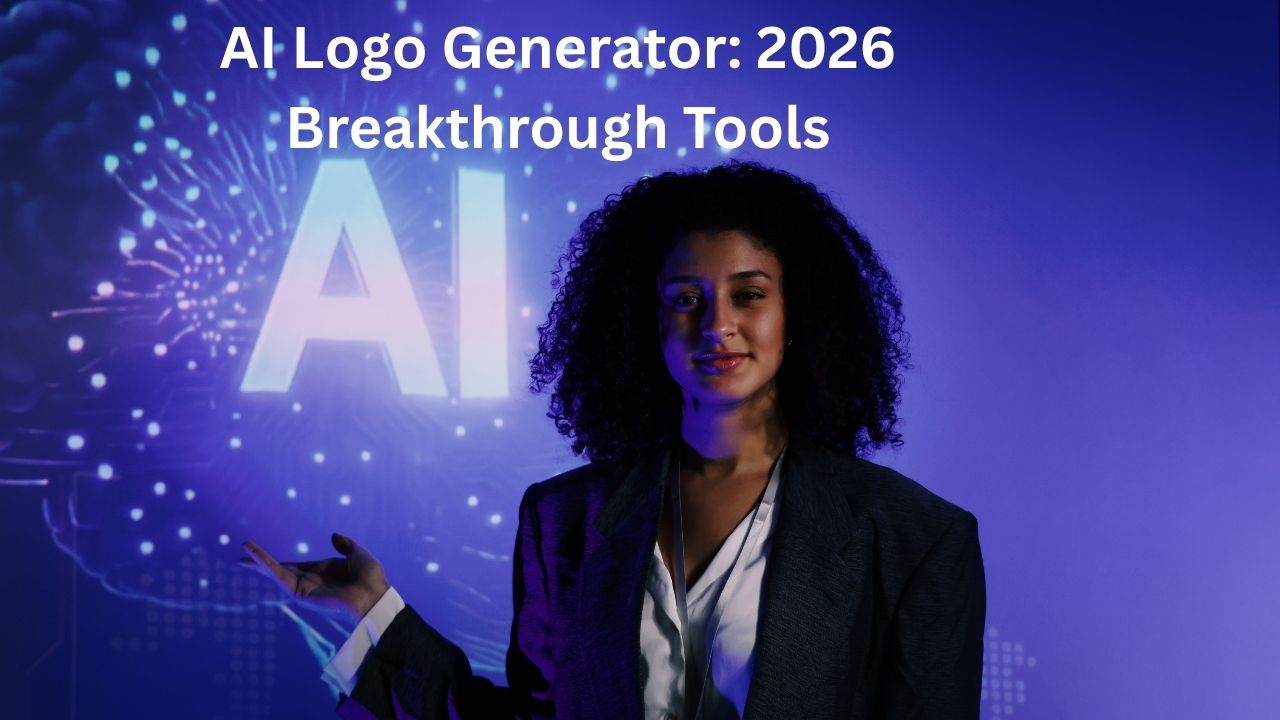
In February 2026, an AI logo generator became an essential innovation for anyone building a brand in the digital era. These intelligent platforms use state-of-the-art generative AI to transform text prompts, sketches, or basic inputs into polished, scalable logos within seconds—empowering entrepreneurs in Faisalabad, remote freelancers, and global teams alike.
Gone are the days of expensive agency retainers or endless revisions. Today’s AI logo generators blend machine learning precision with creative flexibility, reflecting broader trends in automation and accessible design. They solve real pain points: speed, cost, and skill gaps, while pushing toward more dynamic, personalized branding futures.
What is an AI Logo Generator?
An AI logo generator is specialized software powered by artificial intelligence—typically diffusion models, GANs, or fine-tuned image generators—that crafts unique logos from user descriptions, brand names, industries, or even hand-drawn sketches.
By 2026, these tools have matured significantly. They no longer rely solely on templates; many offer true generative creativity, producing original vector designs that adapt to trends like neo-minimalism, adaptive elements, or expressive typography.
This technology democratizes professional-grade branding, making it viable for startups, side hustles, and established companies refreshing identities in fast-moving markets.
2026 Snapshot:
- Widespread adoption of multimodal inputs (text + image + sketch).
- Focus on production-ready vectors and full brand kits.
- Emphasis on originality and ethical generation.
How Does an AI Logo Generator Work?
Modern generators start with user input—often a detailed prompt like “minimalist coffee brand logo with warm organic shapes and custom serif typography.”
Natural language processing interprets the request, while generative models (diffusion or transformer-based) synthesize visuals from vast trained datasets of design principles, icons, fonts, and color theory.
Refinement loops allow real-time tweaks, and outputs are vector-based (SVG) for infinite scalability. Cloud computing handles heavy lifting, ensuring accessibility on any device.
The core purpose: accelerate ideation and execution in a world where branding must move as fast as business.
Core Workflow Steps:
- Input Gathering — Text prompt, style selectors, or uploaded reference.
- Semantic Understanding — NLP breaks down intent and matches design rules.
- Generative Phase — AI creates multiple high-quality variations.
- Iterative Editing — Adjust fonts, colors, spacing, or regenerate sections.
- Export & Kit — Download files + matching assets (cards, social banners).
Tools like Logo Diffusion stand out for deep creative control and production focus.
Standout Features in 2026
Leading platforms now go far beyond basic generation, offering robust ecosystems.
- Multimodal Creation — Text, sketch-to-logo, image-to-logo conversion.
- Adaptive & Dynamic Support — Generate variants that shift for context or motion.
- Full Brand Ecosystem — Instant business cards, social templates, color palettes.
- High Customization Depth — Fine-tune every curve, kerning, and element.
- Trend-Aware Styles — Built-in support for 2026 aesthetics like imperfect textures, pixel sharpness, or generative morphing.
Canva’s Dream Lab excels at ease and style variety, while Logo Diffusion prioritizes professional refinement and originality.
Bold Takeaway: In 2026, the best AI logo generators act as intelligent co-creators, not just automated drawers.
Major Benefits Driving Adoption
These tools deliver transformative advantages in today’s digital landscape.
- Cost Efficiency — Professional results for free or low one-time fees vs. thousands in agency costs.
- Lightning Speed — Dozens of concepts in minutes, ideal for testing or launches.
- Inspiration Boost — Surface fresh ideas aligned with current trends like warm organics or neo-minimalism.
- Accessibility — No design degree needed—perfect for non-creatives and global users.
- Scalability — Vector outputs ready for websites, merch, packaging, and more.
Small businesses and startups especially benefit, gaining polished identities that compete with bigger players.
Realistic Limitations & Best Practices
Even top tools have constraints. Vague prompts can yield generic or off-brand results. Some designs may unintentionally resemble existing marks, requiring trademark checks.
Free versions often watermark or limit exports. Heavy reliance without human oversight risks losing emotional depth or cultural nuance.
Practical Warnings:
- Prompt Power — Invest time in detailed, specific inputs.
- IP Diligence — Always search trademarks post-generation.
- Hybrid Wins — Use AI for rapid concepts, then refine with human eyes.
Ethical advancements in 2026 continue reducing biases and improving uniqueness.
Real-World Use Cases & Examples
Local entrepreneurs in Punjab use tools like Design.com to create culturally resonant e-commerce logos quickly. Freelancers generate client pitch decks with multiple variations from Sologo.AI.
Tech startups experiment with adaptive logos for app icons that shift by user context. Wellness brands craft serene, organic marks via Canva or Looka.
From observation, these generators have become launch accelerators—turning weekend ideas into market-ready brands overnight.
AI Logo Generators vs Traditional & Manual Design
| Aspect | 2026 AI Logo Generators | Traditional / Manual Design |
| Creation Speed | Seconds–minutes | Days–weeks |
| Cost | Free–$100 (often one-time) | $500–$10,000+ |
| Idea Volume | Unlimited instant concepts | Limited by time & budget |
| Skill Barrier | Low—prompt-based | High—requires expertise |
| Customization | Deep AI-assisted editing | Fully manual precision |
| Uniqueness | Strong with good prompts; check IP | Inherently original |
AI dominates efficiency and exploration; traditional methods shine for nuanced storytelling. Most pros now use hybrid workflows.
The Exciting Future Ahead
Late 2026 and beyond will see deeper integration: real-time generative morphing based on data, AR previews for physical applications, blockchain-tracked originality, and stronger sustainability filters.
Trends like imperfect-by-design aesthetics, hyper-expressive type, and context-aware adaptive identities will dominate. Branding becomes fluid, intelligent, and deeply personal.
FAQ
What is an AI logo generator in technology?
An AI logo generator uses generative machine learning (diffusion models, GANs) to create custom, vector-based logos from text prompts, sketches, or images—powering fast, scalable digital branding.
How does an AI logo generator work?
It interprets prompts via NLP, generates visuals with trained AI models, allows real-time edits, and exports production-ready files—automating what used to take professional designers days.
Is an AI logo generator safe or reliable?
Yes—reputable 2026 platforms use encryption and ethical models. Reliability is excellent for most needs (90%+ pro satisfaction), but always verify uniqueness and trademarks.
Who should use an AI logo generator?
Startups, freelancers, small businesses, marketers, and anyone needing quick, affordable, high-quality branding without a design team—especially in fast-paced digital environments.
What are the latest updates or future developments in AI logo generators?
2026 highlights include multimodal inputs (sketch + text), adaptive/dynamic logos, full brand kits, and trend alignment (neo-minimalism, imperfect textures). Future: real-time morphing and AR integration.
What problems does an AI logo generator solve?
It eliminates high costs, long wait times, and skill requirements of traditional design—enabling rapid experimentation and professional results for global creators and businesses.
Common misconceptions about AI logo generators?
They don’t only produce “cookie-cutter” work—top 2026 tools like Logo Diffusion deliver deeply customizable, original results. They enhance creativity, not replace human strategists.
Conclusion
An AI logo generator in 2026 embodies the fusion of powerful technology and practical creativity—delivering fast, affordable, trend-aligned branding that was once out of reach for most.
From generative mechanisms and deep customization to real-world acceleration and emerging adaptive futures, these tools are redefining how identities are born and evolve.
For innovators, entrepreneurs, and curious minds: jump in today. Test Canva Dream Lab, Logo Diffusion, Design.com, or Sologo.AI. Your brand’s next chapter could start in under a minute
.