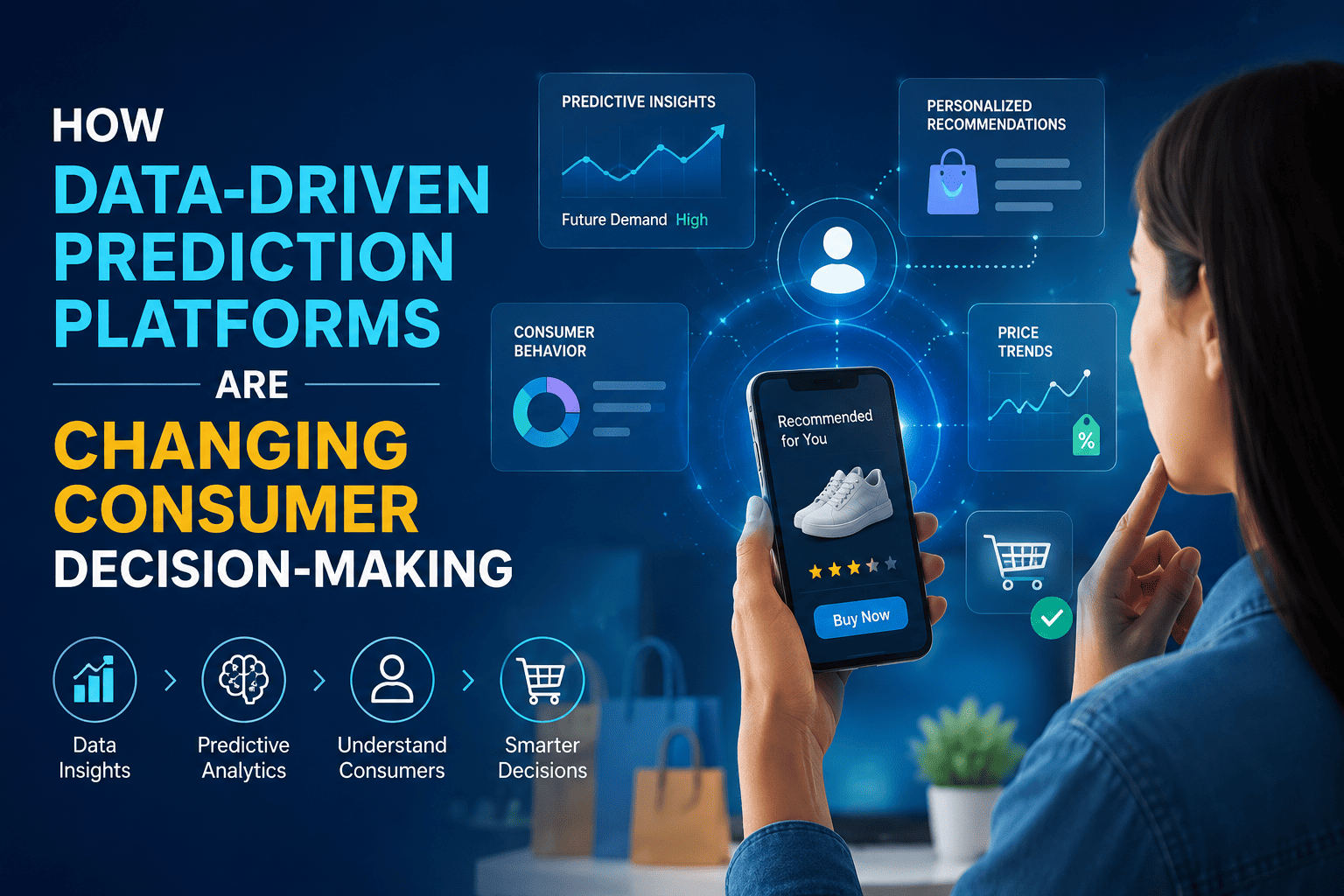
Modern consumers face a paradox. Information has never been more available, yet making informed decisions has become increasingly difficult. Whether evaluating sports outcomes, comparing digital entertainment platforms, or analyzing consumer trends, people often encounter more data than they can reasonably process.
This shift has created demand for platforms capable of transforming raw information into actionable insights. Businesses operating in prediction-based environments recognized this challenge years ago. Today, predictive analytics, probability models, and real-time data interpretation influence decisions across industries ranging from sports media to digital entertainment.
Organizations that understand how users process information gain a significant advantage because they help audiences reach conclusions faster while reducing uncertainty.
Why Predictive Data Has Become More Valuable Than Raw Information
The Growing Cost of Information Overload
Consumers rarely suffer from a lack of information. More often, they struggle to determine which information matters.
Consider the sports sector. A cricket fan can access player statistics, historical records, pitch reports, weather forecasts, injury updates, and team performance metrics within seconds. While this abundance creates opportunities for deeper analysis, it also increases the difficulty of identifying the factors most likely to influence outcomes.
Successful prediction-focused platforms address this problem by organizing information around decision-making rather than simple reporting. They filter noise, highlight meaningful variables, and provide context that allows users to interpret events more effectively.
A similar pattern appears in digital entertainment markets. Users often compare game mechanics, payment systems, promotional structures, risk levels, and platform usability before making choices. Instead of forcing users to navigate dozens of disconnected pages, platforms increasingly present structured information that supports faster evaluation.
Within this environment, resources such as desi apk login provide an example of how modern entertainment platforms organize multiple categories of information into a single user experience. Rather than focusing on one product, the platform aggregates sports-related content, gaming options, live events, account access tools, and mobile functionality. This approach reduces friction because users can compare available options without navigating multiple disconnected systems. The value comes less from volume and more from how information is structured and delivered.
Why Context Creates Better Decisions
Data becomes useful only after context is applied.
A cricket batter averaging 45 runs may appear highly effective. However, that statistic changes meaning when analysts examine the opposition faced, match conditions, venue performance, and recent form. Context transforms isolated numbers into insights.
The same principle applies to business decision-making. Revenue growth alone provides limited information. Revenue growth combined with customer acquisition costs, retention rates, and profit margins produces a more complete picture.
Organizations that consistently outperform competitors often focus on contextual interpretation rather than simple data collection.
How Prediction Models Influence User Behavior
Real-Time Analytics and Faster Decisions
The rise of real-time analytics has changed how consumers interact with information.
Traditional decision-making often relied on historical reports published hours or days after events occurred. Modern users expect live updates, dynamic forecasts, and continuously adjusted projections.
This expectation is particularly visible in industries where outcomes evolve rapidly.
Key factors driving this shift include:
- Faster access to live data feeds
- Improved mobile connectivity
- Greater availability of predictive algorithms
- Increased consumer familiarity with analytics
As a result, users no longer wait for summaries. They expect immediate interpretation.
Building Trust Through Transparency
Prediction platforms face a unique challenge. Users must believe that recommendations are based on credible methodologies rather than arbitrary conclusions.
Trust develops when platforms clearly explain the factors behind predictions.
For example, advanced sports analysis systems may consider:
- Historical head-to-head records
- Venue-specific performance trends
- Recent player statistics
- Weather and environmental conditions
- Injury reports and squad changes
When users understand how conclusions are reached, they become more likely to rely on the platform’s insights.
Transparency also improves long-term engagement because audiences learn how to evaluate information independently rather than simply accepting predictions at face value.
Why Businesses Are Investing in Predictive Intelligence
Consumer Expectations Continue to Rise
The modern user expects personalized experiences.
Generic content attracts less attention because audiences increasingly prefer recommendations tailored to their interests and behavior patterns. Predictive systems help organizations identify those preferences more accurately.
Streaming services recommend content. Retailers predict purchasing behavior. Financial institutions assess risk profiles. Sports analytics platforms forecast outcomes.
Although the industries differ, the underlying objective remains consistent: reduce uncertainty and improve decision quality.
Competitive Advantages Created by Better Forecasting
Organizations that predict behavior effectively gain advantages across several areas.
They allocate marketing budgets more efficiently. They improve customer retention. They identify emerging trends before competitors recognize them.
More importantly, predictive systems often reveal opportunities hidden within large datasets. Human analysts may overlook subtle patterns, while machine-learning models can detect relationships across thousands of variables simultaneously.
This does not eliminate the importance of human judgment. Instead, it allows experts to focus on interpretation and strategy rather than manual data collection.
The Future of Prediction-Based Digital Platforms
Moving Beyond Historical Analysis
The next generation of predictive platforms will focus less on reporting past events and more on modeling future scenarios.
Artificial intelligence systems already evaluate millions of data points in real time. As computing capabilities improve, prediction accuracy will continue increasing across industries.
Businesses will likely combine behavioral analytics, historical performance data, and contextual information into unified decision-support systems.
Human Expertise Remains Essential
Despite advances in automation, successful prediction platforms still depend on human expertise.
Algorithms identify patterns, but professionals determine which patterns matter. Context, judgment, and industry knowledge remain critical components of effective decision-making.
Organizations that combine advanced analytics with experienced interpretation will continue delivering the most valuable insights.
Conclusion
Prediction-driven platforms have evolved far beyond simple information repositories. They now function as decision-support systems that help users navigate increasingly complex environments.
Whether analyzing sports outcomes, evaluating entertainment options, or identifying business opportunities, consumers increasingly rely on platforms capable of transforming raw data into meaningful insights.
The organizations that succeed in this environment are not necessarily those collecting the most information. They are the ones presenting information in a way that improves understanding, reduces uncertainty, and helps users make better decisions with confidence.